


News
Environmental safety of building materials. Requirements for building materials
01.01.2022


01.01.2022
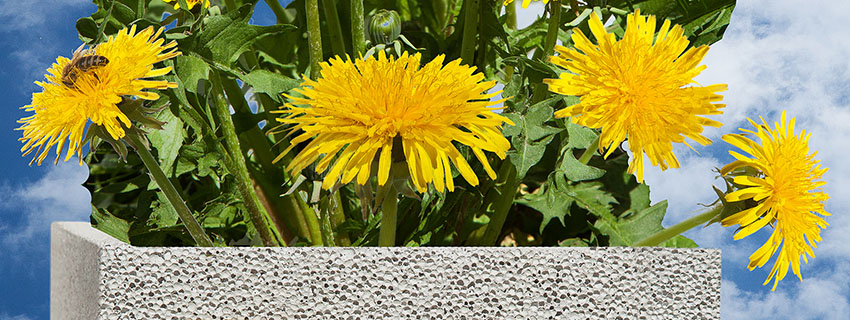
We are living in an era of growing environmental crisis. The prolonged disturbance of the balance in nature has made humanity realize something that, despite its obviousness, has long escaped its attention: all living organisms inhabiting our planet do not exist on their own, but depend on the environment and are affected by it. We must admit that we have advanced a little further in the field of environmental protection than we did 50 years ago. When envisioning new construction, we began to realize that any building must not only meet functional and aesthetic requirements, but also not have negative environmental impacts. What we build today should be in harmony with the surrounding nature and should not pollute it in many years to come.
Typically, the economic durability of a building is estimated at 80 years, and the functional durability is 40-50 years. After the end of its service life, the building is demolished, and the issue of utilization of waste material arises with the possibility of its recycling and reuse. Building materials, products and structures account for 50-60% of the cost of construction. The choice of efficient resource- and energy-saving, environmentally friendly building materials, products and structures will significantly reduce the cost of construction, its labor intensity and energy consumption, while improving the durability, quality and comfort of buildings, and significantly reduce the negative environmental impact. Raw materials for the production of building materials should be widely available and environmentally friendly. Natural materials include water, sand, and carbonate rocks (limestone, chalk, marl) and their products, such as lime and cement. For example, the average specific value of natural radionuclides in limestone is 22.4 Bq/kg, sand – 40.3 Bq/kg, clay – 102.2 Bq/kg and granite – 126.8 Bq/kg. A multilateral analysis of the radiation safety of raw materials and construction products shows the advantages of using autoclaved aerated concrete products in residential construction. Its radiation background is several times lower than that of ceramic bricks and heavy concrete using granite crushed stone (a material with a significant content of natural radionuclides). The consumption of raw materials per unit of production should be relatively small to ensure minimal material intensity of production. The energy intensity of the production of building materials should be minimal to reduce the extraction of raw materials for heat and electricity generation, as well as to reduce carbon dioxide emissions. According to the Federal Association of Silicate Brick Manufacturers (Germany), the total energy consumption for the production of 1 m³ of cellular concrete averages 324.11 kWh/m³, and for hollow ceramic bricks – 616 kWh/m³.
Extensive analytical work on the feasibility study of various building materials has shown that aerated concrete structures compare favorably with traditional wall materials in terms of material consumption, energy consumption, capital intensity and overall labor intensity. For example, the specific capital investment, which takes into account the associated costs of production of raw and auxiliary materials and fuel and energy resources, for walls made of autoclaved aerated concrete is 1.5 times less than for expanded clay concrete. The energy intensity of production (taking into account the production of binders and aggregates) of aerated concrete panels compared to expanded clay panels is about 2 times less and aerated concrete wall blocks are 1.8-2.7 times less than that of ceramic stones and clay bricks, and the heat energy consumption in the operation of such buildings (per 1 m² of wall) is 10-40% less. The use of autoclaved aerated concrete blocks in the walls of buildings instead of bricks reduces the labor intensity of construction by 1.4-2.0 times.
With the introduction of new regulatory indicators for thermal protection of buildings, their construction from traditional wall materials (brick and expanded clay panels) has become economically unprofitable, as it would require an increase in wall thickness to 1.5-2.0 m. Autoclaved aerated concrete products have a thermal conductivity coefficient 2-3 times lower than that of bricks and expanded clay panels. Accordingly, walls made of autoclaved aerated concrete are 2-3 times warmer than brick walls while maintaining the thickness of wall structures within 375-600 mm. This is beneficial, first of all, for economic reasons, since the volume of wall structures is also reduced by 2-3 times while ensuring thermal resistance that meets modern standards. In this situation, the accelerated development of autoclaved aerated concrete production as the most efficient, practically non-alternative and commercially available structural and thermal insulation material is an urgent task. Given that the volume of aerated concrete in a wall structure can be 70-100%, increasing its production will significantly reduce overall labor costs, construction costs and, accordingly, the market value of housing while ensuring new regulatory indicators of thermal protection of buildings.
In addition to assessing the technical and economic indicators of the effectiveness of the use of various wall materials and products, one should focus on another important factor, namely the microclimate of the intra-housing environment or the so-called comfort of living. There is a well-known gradation of human comfort in houses with walls made of different materials, proposed by foreign researchers at the International Symposium on Autoclaved Building Materials in Hanover more than 30 years ago. According to this gradation, the first place in terms of comfort is occupied by houses with walls made of wood, then by houses with walls made of cellular concrete, then by walls made of silicate and ceramic bricks, and walls made of expanded clay concrete and ordinary reinforced concrete occupy the last places. Intermediate places in this gradation are occupied by walls with mixed wall materials and products. As can be seen from the above data, in terms of environmental performance, cellular concrete is closest to wooden structures. The use of autoclaved aerated concrete in buildings can reduce the amount of radiation background in the premises. Autoclaved aerated concrete “breathes”, regulating the humidity in the premises. Buildings made of cellular concrete are practically eternal, and their strength characteristics increase over time. Unlike wood, they do not rot and at the same time have properties similar to wood and stone. Inspections of buildings with structures made of cellular concrete that have served up to 60 years have shown complete preservation of the material and suitability for further use. Moreover, of all the types of walls in residential buildings in operation, aerated concrete walls are the warmest, i.e., energy-saving. Their equilibrium humidity is 4 times less than that of wooden walls, radioactivity is 5 times less than that of brick walls, vapor permeability (ability to “breathe”) is 3 times higher than that of wood, 5 times higher than that of brick, and 10 times higher than that of reinforced concrete three-layer panels. Cellular concrete is a fireproof material. It does not burn and effectively prevents the spread of fire, and therefore can be used for the construction of walls of all fire safety classes.